
Chapter One: The Last Carnival of the Year
Before Richmond was known for anything else, it was known for this: it was the town where the carnival always came home.
Not home in the sense of belonging to it. Gravely's Carnival of Wonders belonged to the road, the way all traveling shows do, moving from county fair to county fair, from spring mud to summer dust, a whole world of canvas and calliope music packed into railcars and flatbed trucks and carried from one town's edge of town to the next. But every October, when the light went thin and gold and the nights came down early, Gravely's finished its circuit in the same place it always had, on the same flat stretch of pasture at the edge of Richmond, where the Kessler family had once grown corn before old man Kessler sold the northern acreage off in a bad year and never quite forgave himself for it.
They called it The Last Carnival of the Year, and it was not, in the town's memory, ever meant to be anything but a celebration. One final show before the show closed up for winter. One last night of noise and color and things that lit up in the dark, before the whole county settled into the long gray months and everyone went back to being exactly who they were the rest of the year.
Richmond loved it the way small towns love the thing that makes them feel, once a year, like the center of something larger than themselves.
By 1958, the tradition was old enough that nobody in town could quite say when it had started, only that their parents remembered it, and their parents' parents, back to some hazy point where the story blurred into simple fact: the carnival always ends here. Children were born in years the carnival came, and their birthdays were half-remembered by which acts had been new that season. Old men measured their own decline against the show: I used to be able to make that ring toss every year; now my hands won't do it. That was the way other towns' old men measured themselves against harvests or wars.
And every year, on the final night, the town gathered at the edge of the Kessler pasture to hear the bell.
It's worth understanding, before anything else, what kind of show it was. Not a cruel one. Not yet.
Gravely's Carnival of Wonders was, by every honest account that survives, a genuinely wondrous thing to watch, a little threadbare at the seams if you looked too closely, the way every good traveling show is, but dazzling from the distance a paying audience was meant to stand at. It had been built up over generations by the Gravely family, passed down like a birthright nobody in that family had ever seriously questioned wanting, until, by 1958, it had come to rest under the stewardship of an aging showman everyone simply called Old Gravely, a man whose real first name had been swallowed so thoroughly by his stage title that even his own performers mostly forgot it.
Old Gravely was tired that year, and everyone who worked under the big top knew it, in the particular way a family knows when its head is starting to lean on someone younger. He had begun, over the previous two seasons, to let a great deal of the actual show, the pacing, the flourish, the address to the crowd, fall to the performer who was, by then, unmistakably the heart of the whole operation.
He didn't have a stage name recorded anywhere official. The surviving programs simply call him "Your Ringmaster" in looping gold script, a title rather than a name, which in hindsight nobody in Richmond has ever found particularly comforting. He'd come up through the show as a boy, the way carnival children sometimes do, first as a hand who swept sawdust and refilled the ring toss bins, then as a barker's understudy, then, because he had a gift for it that even Old Gravely couldn't pretend not to notice, as the man out front, in the ring, in the light.
He was, by every account, magnetic. Not handsome in any remarkable way, but watchable, the way certain performers simply are, the kind of presence that could hold three hundred restless fairgoers silent with nothing but a raised hand and a pause held one half-second longer than felt comfortable. He believed, with the total, unclouded conviction only a young man can manage, that a show was a sacred thing between the people performing it and the people watching it, and that a promise made to an audience, stay, and something wonderful will happen, was a promise that could never, under any circumstance, be broken.
Old Gravely used to say, fondly and a little wearily, that the boy loved the show more than the show had ever loved anyone.
He was not wrong.
By 1958, the rest of the cast that Richmond would come to know, and, without knowing it yet, come to grieve, were as familiar to the town as its own storefronts.
Otto Kessler wasn't carnival folk at all. He was Richmond born and raised, a dockworker down at the grain elevator with forearms like fence posts and a laugh that carried across a whole fairground. It was his family's old pasture the carnival set up on every year, a fact he brought up at every opportunity with a pride that had nothing to do with the small rental fee it earned his father. Otto didn't work the show. He came every single year, first with his own parents, and by 1958 with a wife and two small children of his own, and he was, without ever asking for the job, the closest thing the fairground had to an unofficial safety net, the man who caught the kid who climbed too high on the fence, who talked down the drunk who got too loud at the ring toss, who could be counted on, every year, without fail, to be standing wherever help happened to be needed.
Loretta Voss told fortunes in a tent strung with more colored scarves than the show could probably afford, and had done so for eleven seasons by then, long enough that half the young women in every town on the circuit had, at some point, paid their dime to sit across from her and ask about a boy. She was, privately, less interested in fortunes than in people, and had a gift, real or performed, nobody who knew her seemed entirely sure, including possibly Loretta herself, for reading exactly what a person was afraid of before they'd said a word. She kept a small dog that never once, in eleven seasons, willingly set foot inside the fortune-telling tent, which she found funnier than anyone else did.
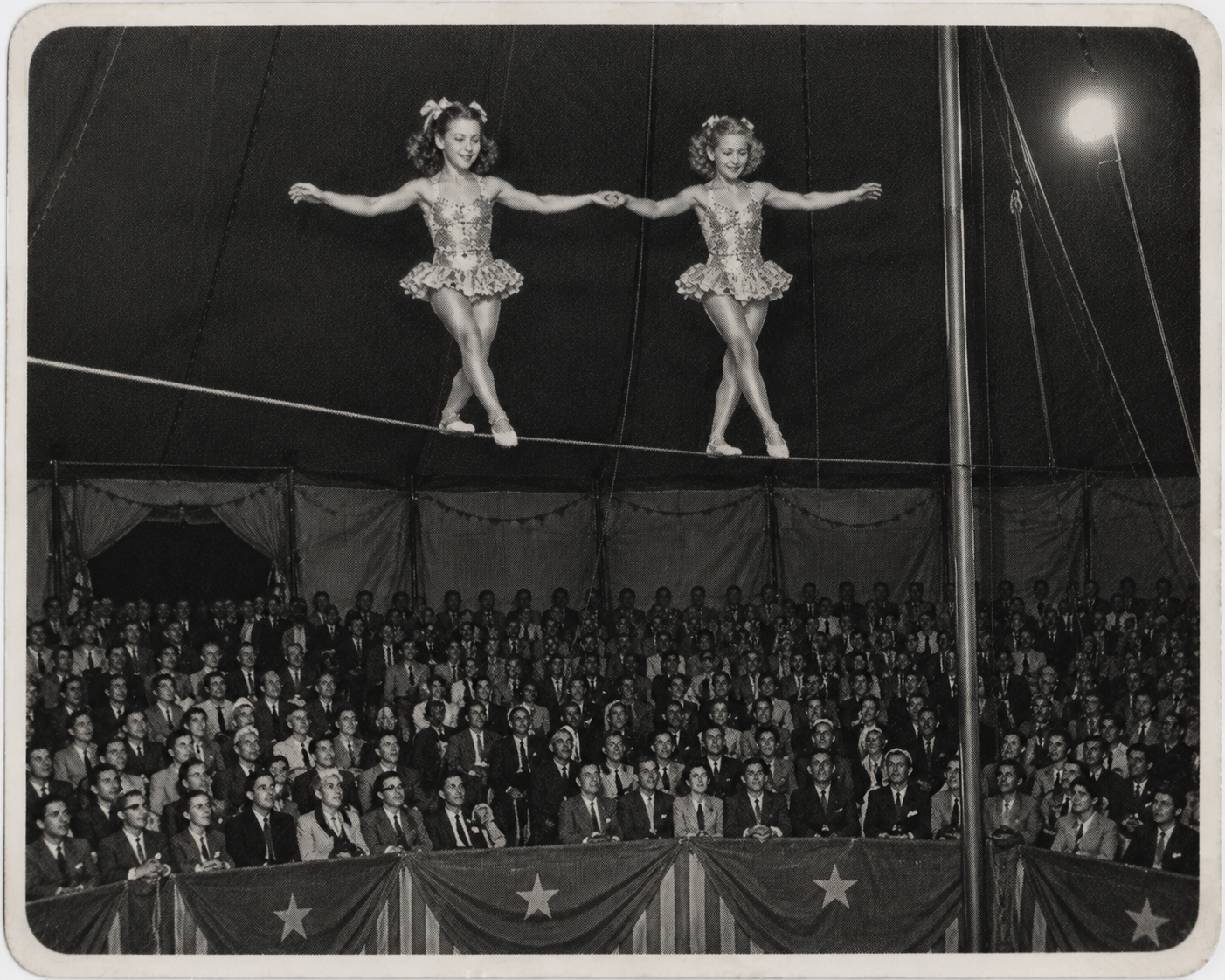
Iris and Ivy Marchetti, eleven years old and inseparable in the way only twins manage, had joined the show two years prior when their mother took work as a seamstress for the costume wagon, and had talked their way, mostly through sheer relentless charm, into a tightrope and acrobatics act far more polished than any two children that age had any right to perform. Richmond adored them specifically. The local paper had run a photograph of the two of them, mid-air, arms linked, the previous autumn, with the caption Richmond's Own Little Wonders, which their mother had cut out and kept.
Charlie Pemberton was seventeen, and this was only his first season, a Richmond boy himself, working the show for a summer and fall to save toward tuition he hadn't fully worked out how to afford otherwise, selling balloons and shaved ice with the specific over-eager enthusiasm of someone still new enough to a job to genuinely enjoy it. He had, that October, exactly one more week left before the show closed for winter and he went home to his own family three streets over from the fairground, a fact several people would later find difficult to think about for very long.
And Franklin Pope, "Pop" to absolutely everyone, performers and townsfolk alike, a nickname so total that a fair number of people in Richmond genuinely believed it was his given name, had run the show's food stalls for going on thirteen years, a broad, soft-spoken man who kept a coffee tin of butterscotch candies specifically for any child who came through his line looking like they'd had a hard day, and who was, by wide agreement, the single most trusted adult on the entire fairground. Mothers who wouldn't let their children out of sight anywhere else in the carnival would let them wander freely near Pop's stall. He had, more than once, walked a lost child the full length of the fairground back to their family rather than simply pointing the way.
These were not, any of them, cursed people, or marked people, or people who deserved what would eventually come for them. They were, by every account that has survived, simply good: good in the plain, unremarkable way that doesn't get written about until it's gone.
The bell itself hung in a modest wooden tower at the center of the fairground, no more than fifteen feet high, built new every year and torn down again each winter, a piece of set dressing that had, through sheer repetition, become something closer to a civic monument. It had no name of its own beyond simply the Final Bell, and its use was governed by a tradition specific enough that Richmond treated it, half-joking and half in earnest, as a kind of honor.
On the last night of the last carnival of the year, once the final act had taken its final bow, the Ringmaster would call for silence, and a single member of that year's audience, chosen, always, in some small unpredictable way, a coin toss or a raffle number or simply a name called out at random, would be brought up to ring the bell themselves. The show is over, the bell was understood to say. Thank you for staying until the end. Go home, and we'll see you again next year.
In 1958, it had been announced weeks in advance, with unusual ceremony, that the honor would go to whichever child guessed closest to the true weight of the prize pumpkin displayed outside Pop's stall, a contest that had, by the final week of October, become the single most argued-about topic among every child in Richmond under the age of twelve.
Nobody thought, at the time, that this was anything but a nice touch. A little extra magic for a night that was already, every year, the closest thing the town had to magic at all.
It's only in hindsight, and hindsight in Richmond has had decades to work at this particular memory, turning it over and over like a stone worn smooth, that certain details from that final week take on the weight they were never meant to carry at the time.
The calliope, which had played the same rotating set of tunes without fault for as long as anyone could remember, began, in its last few nights, to catch on certain notes, nothing anyone could put a finger on exactly, just a hitch, a half-second where a note that should have resolved simply didn't, before the melody caught itself and carried on as though nothing had happened.
Otto's dog, a placid old retriever who had accompanied him to the fairground without complaint for six straight years, refused on the final night to come any closer than the fence line, and would not be coaxed, bribed, or carried past it, sitting instead with its ears flat and a low, steady whine that Otto's wife would later describe, when asked, as "a sound I'd never heard that animal make before and never wanted to hear again."
Loretta Voss, three separate townspeople would later recall, had been unusually quiet in the days leading up to that final show, a woman known for warmth and easy conversation gone suddenly, uncharacteristically watchful, glancing more than once toward the big top with an expression one witness described only as "like she was waiting for weather that hadn't shown up on the radio yet."
And on the afternoon of the final show itself, the young Ringmaster, by every account still cheerful, still magnetic, still utterly certain that this closing performance would be, as he reportedly told Old Gravely with a grin, "the finest thing this show has ever put in front of an audience", made one small change to the evening's program that nobody thought to question at the time, because nobody had any reason yet to think that questioning it mattered.
He asked that the bell tower's ladder, which was ordinarily left accessible from both sides for the safety of whichever child would climb it that night, be repositioned so that the crowd would have a clearer, unobstructed view of the ringing from the main seating.
It seemed, at the time, like nothing more than a showman's instinct for a better sightline.
Nobody in Richmond, that afternoon, had any reason to think it would matter which side of the bell tower a person could reach.
They would have all the reason in the world by morning.